
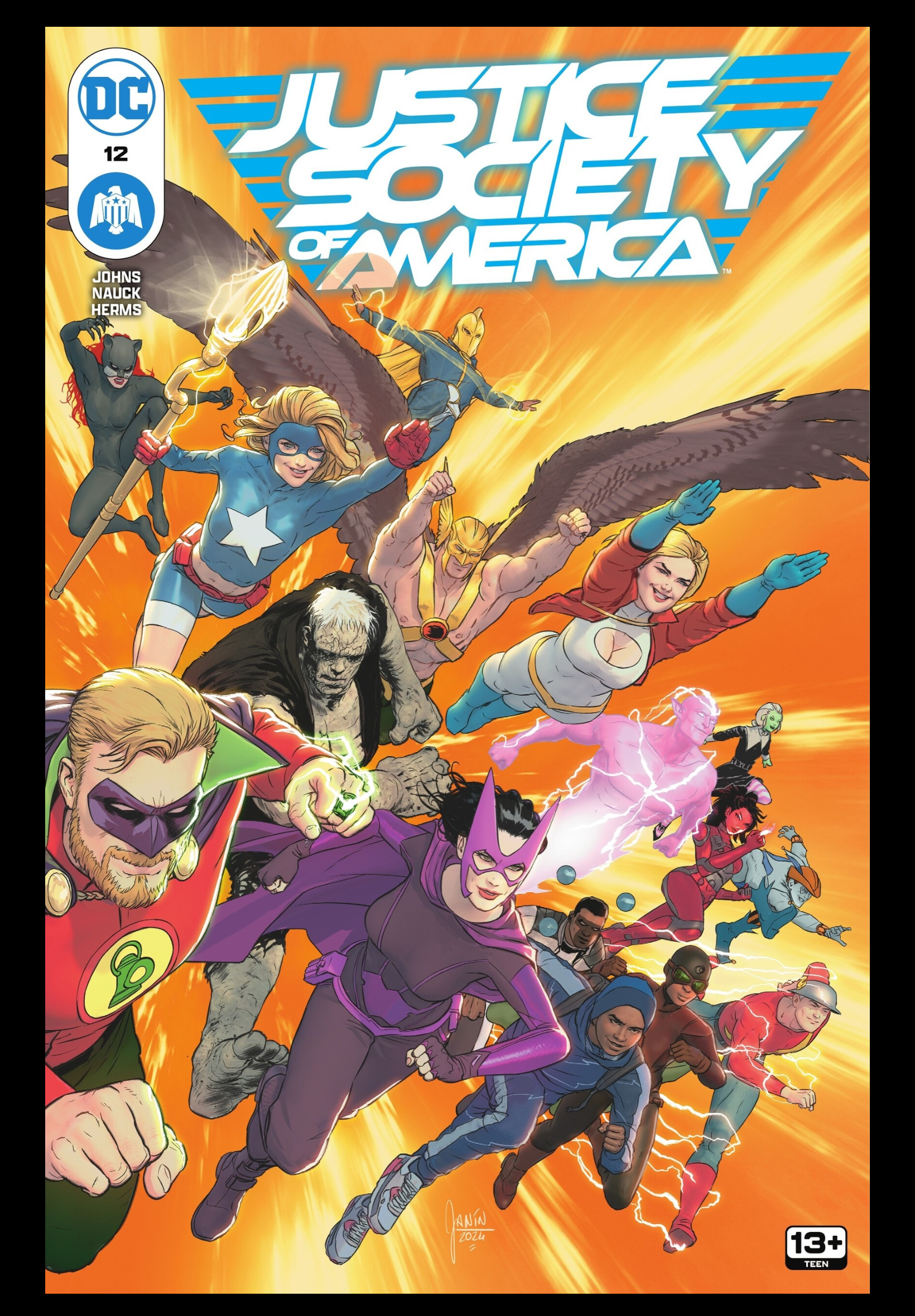
There seems to be some confusion surrounding the final issue of DC’s “Justice Society of America.”
Readers online have groused that the issue no. 12, cover dated December 2024, has no villain, no plot, no story.
With artist Todd Nauck delivering a blast of glorious double-spread pages featuring hundreds of characters, the issue is a sort of heroic spin on “This is Your Life.” Courtney Whitmore, better known as Stargirl, looks back on her life and her adventures with the first and greatest team of super-heroes.
The climax of the tale finds Courtney delivering her high school valedictorian speech and looking forward to her future.
Hardly the time-trippy cosmic battle royale fans are used to.
But if that’s all you’re seeing, you’re missing the point.
This is Johns’ love letter to the JSA, to Stargirl, to the DC Universe, to his fans, and to the true inspiration behind his greatest creation, his beloved sister Courtney, who died at 18 in the explosion of TWA flight 800 in 1996.
Nobody loved the JSA more than Geoff Johns.
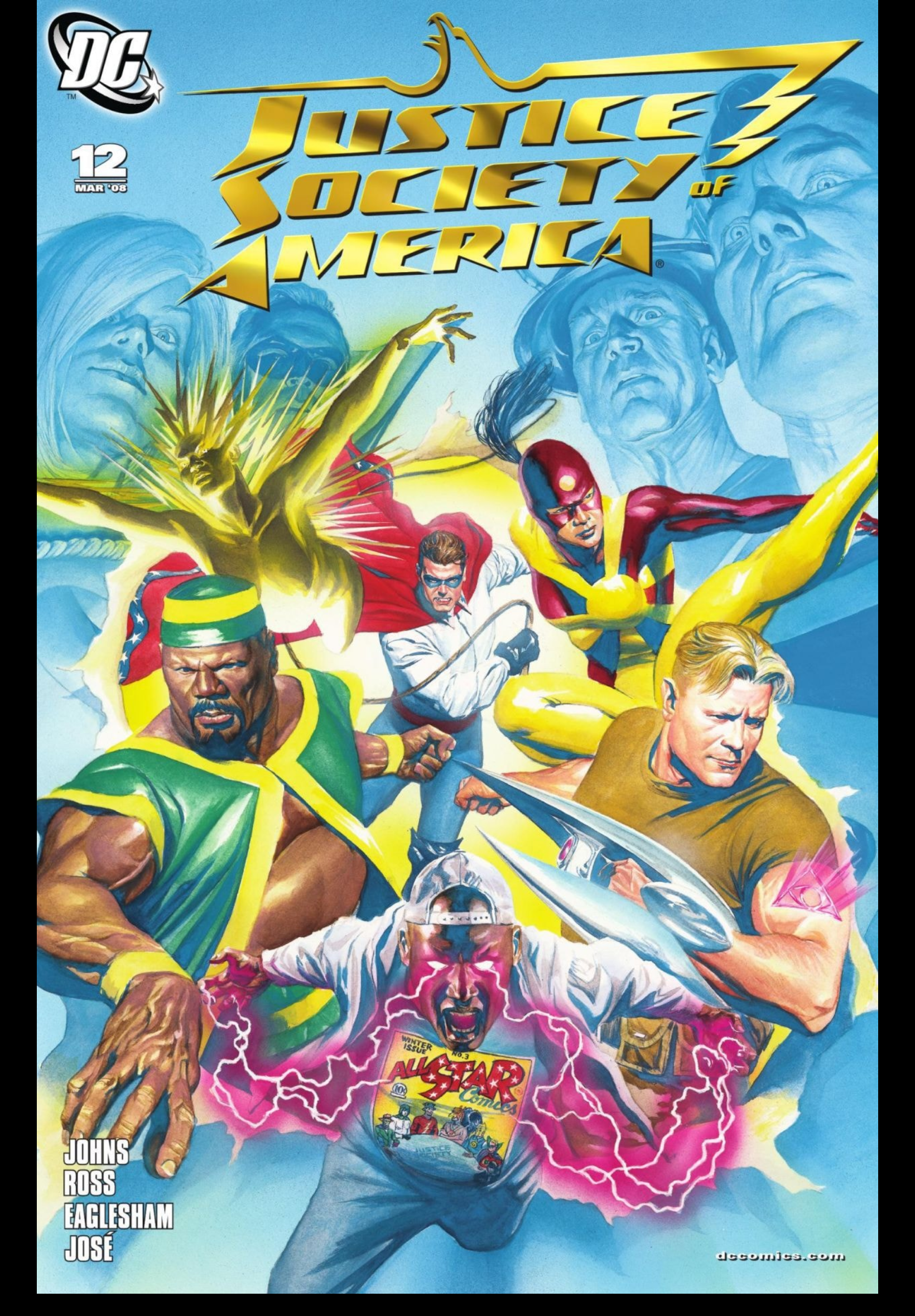
Over a decade in the early 2000s, during his initial run with the team, he gave us stories that stand as classics today. Among his many great stories:
A Christmas reunion that found a home for a Golden Age great
A one-hero war against the Injustice Society of America
Degaton spying on the heroes in their best and worst moments
For once, a character-based JLA/JSA team-up was both insightful and hilarious.
Because of Johns’ enthusiasm and creativity, we got live-action versions of our heroes, first in “Smallville,” then in “Legends of Tomorrow.” Oh, sure, they were guest-stars and bit players and even cannon fodder. (Don’t get me started on how “Legends” did the JSA dirty.)
But Johns wasn’t through. For three glorious seasons, we had “Stargirl,” featuring a young JSA coming into their own, with some of the most thrilling action scenes of any super-hero series ever. Don’t take my word for it:
The only reason why “Stargirl” isn’t on today is because CW decided to give up on original programming and opted to become the purveyor of the cheapest English language programming ever.
While “Black Adam” had its issues, the first big-screen version of the JSA wasn’t one of them. I, for one, still hope we’ll see Aldis Hodge’s Hawkman again. He was amazing.
Johns’ decades-later sequel to his original run may not stand up to his original run, but that’s not for lack of effort and ideas and more to do with behind-the-scenes tribulations.
The prolific writer jumped to Image, where he can work his magic on creater-owned projects.
With his final run at DC, at a time when sidekicks are about as popular as malaria, he invented a dozen or so that fall neatly into the Golden Age. The reveal of the Legionnaire was one of the best thrills of the year and opens the door to a world of stories involving the Legion of Super-Heroes, if anyone at DC is ever interested in revisiting that team.
It seems apparent from the final issues that a lot was cut for space. The Legion/JSA battle in issue 11 should have lasted a full issue, but it seems it was abbreviated so he could give Courtney the right farewell. In an ideal world, her story should have been a proper special. DC had no interest in promoting a book once its star creator announced he was leaving after years of service.
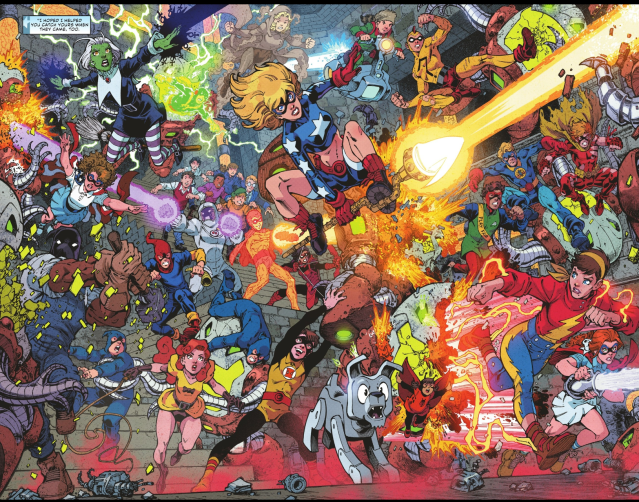
In this last chapter, Courtney finally gets her braces off, graduates, and is ready to embrace adulthood – a time his own sister Courtney was denied. If this is to be Johns’ final story for DC, this is a fitting sendoff.
You can get the digital version through Amazon, but DC didn’t release it with Johns’ moving prose page tribute to Stargirl artist and co-creator Lee Moder. And yet it still tossed in that dumb 4-page advertorial spotlighting AEW wrester Swerve Strickland. Spare me.
The JSA will live without Johns, naturally, and he probably wouldn’t have it any other way.
Jeff Lemire helms a new title later this fall, and hey, maybe we’ll all be surprised and it will be good.
The Golden Age?
Geoff Johns gave all that and more to us.
 Mark Perigard