I get asked so often: Where are the positive portrayals of gay men?
There’s such a hunger to see stories of decent men living lives full of love.
Maybe it’s because the world is so shitty and getting shittier every day. But representation matters, and the stories we share with each other are important.
That was the question DC Comics struggled with in the 1950s.
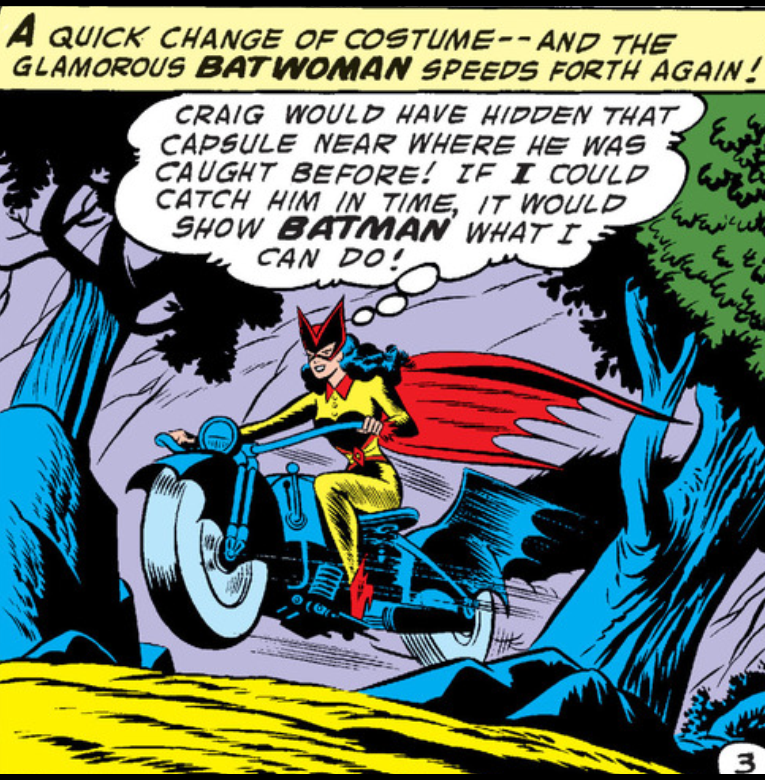
The Dark Knight’s first and best female companion debuted in “Detective Comics” No. 233, cover date July 1956, in the story “Batwoman.”
Trapeze artist, motorcycle rider and heiress Kathy Kane donned cape and cowl to fight crime like her idol. Her career seemingly ended after her first mission when Batman discovered her secret identity. He warned her that if he could do it, criminals could do it as well, jeopardizing her life.
Never mind that he is the World’s Greatest Detective and not the average Gotham crook or that he could have helped Batwoman shore up her security. No, she had to know her place.
And Batwoman agreed she would retire.
Thankfully, that’s not the whole story. Even in the 1950s, Batwoman proved to be too popular to sit at home. So DC had to settle this story hole it had dug.
The gang’s all here: Negative Man, Robotman, Crazy Jane, Elasti-Woman … and Cyborg? (Photo: DC Universe)
If you had to guess what DC property would go on to get its own TV show, “Doom Patrol” would probably be waaaaaay down the list, just past “Prez” and “Sugar & Spike.”
Yet here we are: DC Universe, Warner Bros.’ streaming service for all things DC, launched the TV show earlier this month, and after just the first two episodes, I’m impressed. It stars Brendan Fraser as Robotman and Matt Bomer as Negative Man. It leans heavily into the Grant Morrison run, probably the title’s artistic zenith, but it also keeps elements of the original, most notably, the wonderful Rita Farr, Elasti-Woman.





 Mark Perigard