
I recently finished the second draft of my novel, and I was feeling satisfied.
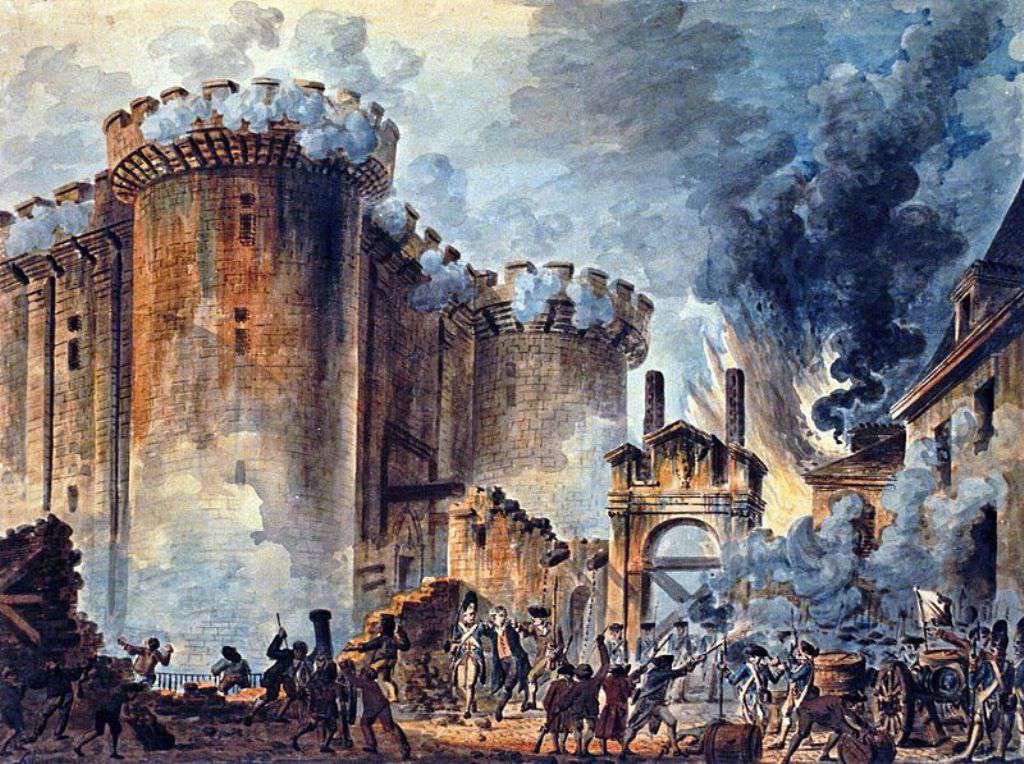
The hard-won result of two years of research and writing, my story is set in the years leading up to the French Revolution and follows my lead character into the Reign of Terror.
The second draft, in my humble opinion, was a massive improvement over the first. I had fleshed out character motivations and dropped some plot swerves that I hope will one day surprise readers.
But I decided to compare the timeline of actual events to the events in my novel.
Now as a historical fiction writer, I think it’s my job to stay true to the spirit of the times. Nobody’s cracking open a diet soda or jumping on a street trolley or whipping out a cell phone because that would just be deranged.
I discovered I was quoting an important political manifesto a few years before it was released, so I changed it to a draft-in-progress by my progressively minded side character. That was an easy fix.
The guillotine as a means of execution didn’t come into play until 1792 in France; before that, France hanged most prisoners. I had to take that into account. So some minor characters kept their heads but still lost their lives.
But I moved a minor military skirmish outside of Paris to the actual city just because I wanted my lead character involved, and there was no sensible reason why she would be in that suburb at the time.
Yes, I’m taking a liberty with the facts, but not so much to take the average reader out of the story. I’m not making a documentary.
This is the sort of battle that goes on with any fiction writer dealing with historical fact. Just by inserting my lead character into major events or having her meet the Sun King himself Louis XVI (and based on an actual event in which he met a handful of working class women), I’m already diverging from historical narrative. I’m trying to toe the line but not let the facts get in the way of a good story.
But about 75 pages into my novel, I introduce a young Parisian boy. About one hundred pages after that, he dies tragically, setting in motion the final arc of my novel.
And as I matched my timeline to my novel, I realized that about fifteen years passed between the boy’s introduction and his demise …
… and in that time he hadn’t aged a day.
Oops.
Gosh, that’s not going to fly.
I have to admit, I had a good laugh when I recognized that gaffe.
I could only imagine a legion of readers getting to that heartfelt moment and tossing that book across the room.
I’ve been a writer long enough to appreciate the act of revising. Every error is an opportunity to do better. Rather than despair, I dug in and got to work.
So I’m knee-deep into my third draft. The little boy has been completely excised from the story. In his place is a new character, with ties to my lead and secondary characters, one who does age naturally as the years pass and whose ultimate fate will resonate even greater.
My goal is to finish this third draft by the end of this year and to start sending it out to agents in the new year. This work has been quite a ride, and it’s exciting to realize the end is in sight.
 Mark Perigard
It’s been many a year since I wrote anything of any length (I had a bunch of short stories and a handful of novels published by independent presses here in the UK in the late 90s/early 00s) but I can completely empathise with that feeling of “Ah crap, should have caught that sooner!”
But you’re right, it’s an opportunity to improve where needed. Best of luck with the third draft. 😁
LikeLike
Thank you. It’s so funny how you can be so close to your work and yet still miss the obvious. Best rationale for letting a piece sit for awhile and then coming back at it with fresh eyes.
LikeLike