
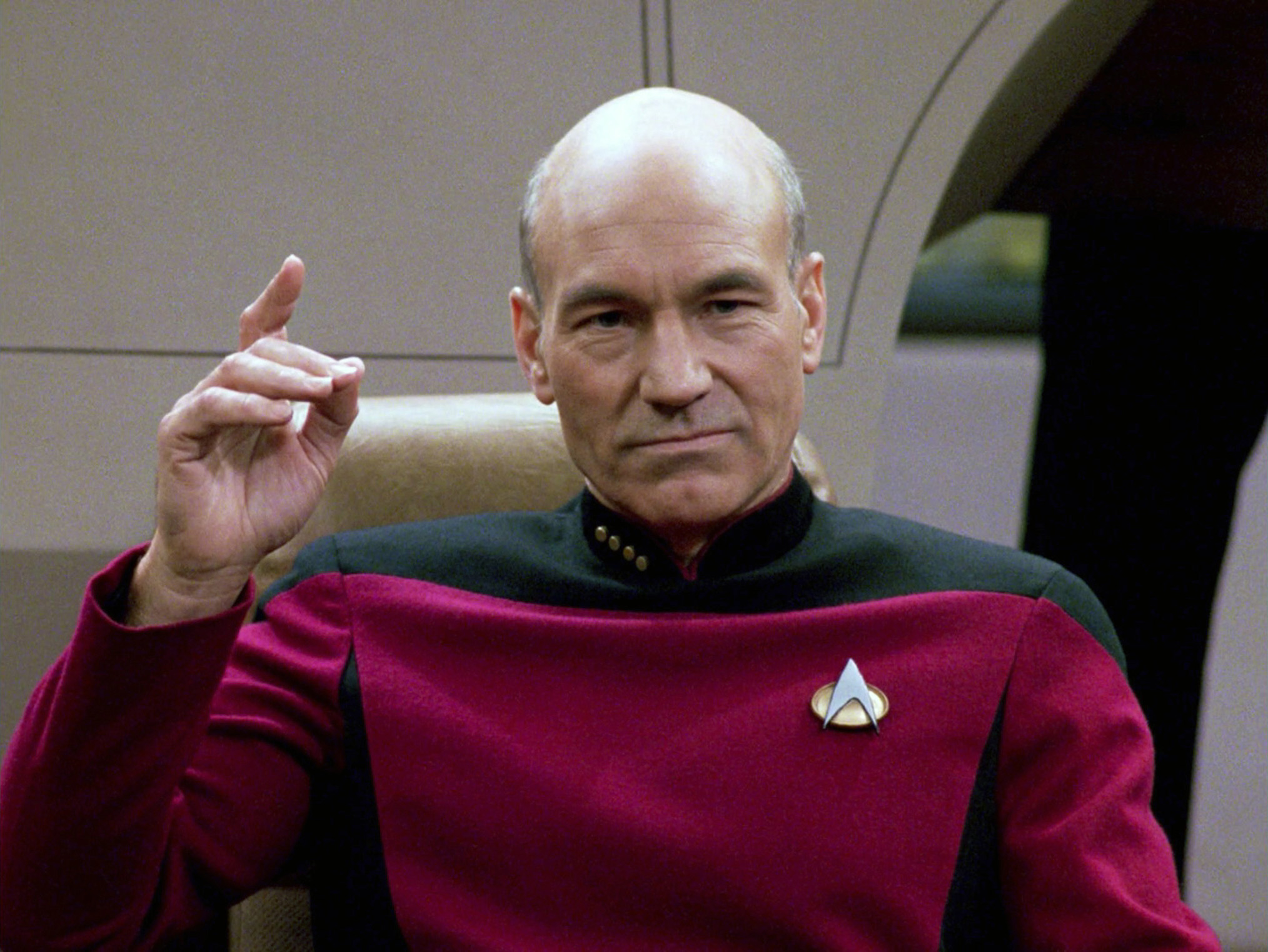
I’m not ready for this.
I don’t want to believe this.
We’ve lost a giant in “Star Trek.”
Patrick Stewart is gone.
Dead at 86.
Is 86 so old? Or am I just so old that I can’t believe all my heroes are fading.
Stewart wasn’t anyone’s first pick for the role that change his life and sci-fi.
“Star Trek” creator Gene Roddenberry didn’t want a bald Englishman helming the reboot of his beloved baby. Paramount wasn’t so keen on him either, forcing him to initially test with a toupee.
Stewart thought the whole process was stupid, and the idea that anyone could follow the classic 1960s show seemed like a joke. He signed the contract, figuring he’d get a year in Los Angeles.
I may have been one of the few American fans happy to learn of his casting. Stewart had made a thunderous impression on me some years earlier as the treacherous Sejanus in “I, Claudius.” He practically devoured the scenery and the audience with it. Stewart could get it.
I was lucky enough to interview him once. Not for “Star Trek,” but for his role as the obsessed Captain Ahab in the 1998 miniseries “Moby Dick.”
When he realized from my questions that I had actually bothered to watch the entire miniseries before our conversation, he was impressed.
Watching the miniseries seemed like the bare threshold for doing my job, but apparently he’d had experience with other writers who couldn’t be bothered.
I had, in that moment, become someone worth talking to, and I remember the swell of pride I felt in that.
Stewart is a big reason why “Trek” flourishes today. He arrived at the critical moment in the franchise’s life. In the hands of a lesser actor, “Next Gen” could have met an ugly, early end, and that would have been the finish of “Trek.”
But after a couple of admittedly rocky seasons, the writers found their groove and wrote to Stewart’s strengths. He was at the heart of many of sci-fi’s, much less all of “Trek’s,” finest episodes. such as “The Inner Light,” “Chain of Command,” and “The Drumhead.” (The latter, I’ve been promising myself I’d make some time to write about. It’s so good and even more relevant today.)
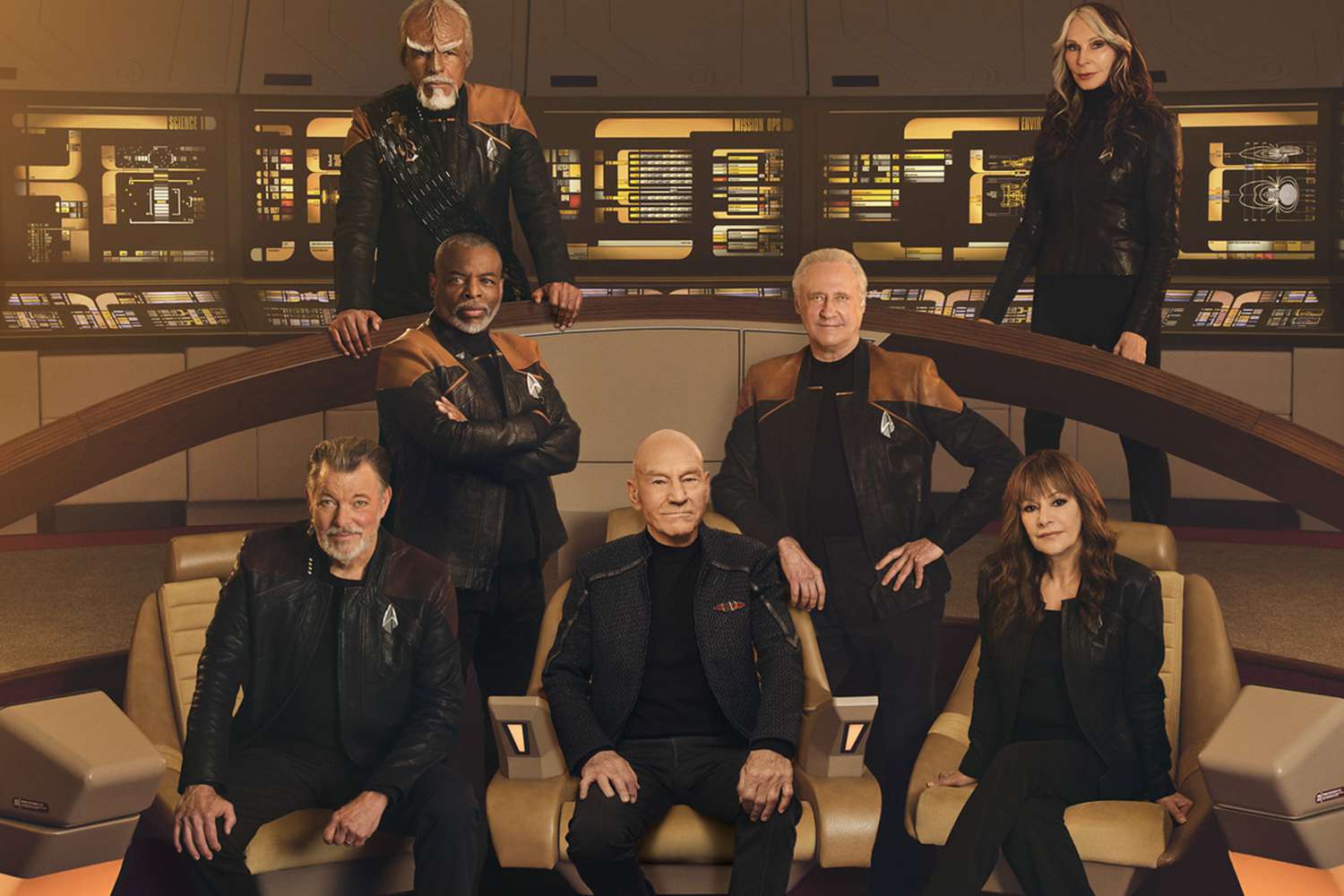
What a gift the Paramount Plus series “Picard” was to us all. The last season, which reunited him with his legendary co-stars, truly stands as the eighth season of “Next Generation.” Stewart was so thrilled with how it came out, he urged Paramount to get everyone back together for the big screen.
If only.
I can’t imagine what his co-stars are feeling right now. Unlike most TV series, the “Next Gen” cast truly became family and have remained constant presences in each others’ lives. (Can someone please give Marina Sirtis a big hug right now?)
He was an ally to the community, saying, “There was never a moment where I made an intellectual choice that I would be a supporter of gay civil rights. It was always a natural and uncomplicated choice. Then later in life, as I got to know well-known activists like Ian McKellen, I was only too happy to join campaigns, march, and support in whatever way I could because it always seemed to me to be something that much too fuss was being made about.”
In the last few years, all things “Star Trek” have become even more important to me. Classic “Trek” saved my life when I was a closeted teen, and as an adult, it reminds me of the future we should all be fighting for. “Trek’s” greatest strength, the one difference between it and every other pop culture franchise, is its profound optimism. Humanity will survive and thrive, and there will be room for everyone.
Stewart has one last big-screen appearance, returning as Professor Charles Xavier in “Avengers: Doomsday.”
As his “Picard” co-star Todd Stashwick said, “We will all carry his impact with us into the future. What a life. … We all should strive to live a life as full.”
Farewell, Captain. And thank you.

